
Custom Banner Buying Guide: How to Choose the Right Banner for Your Needs
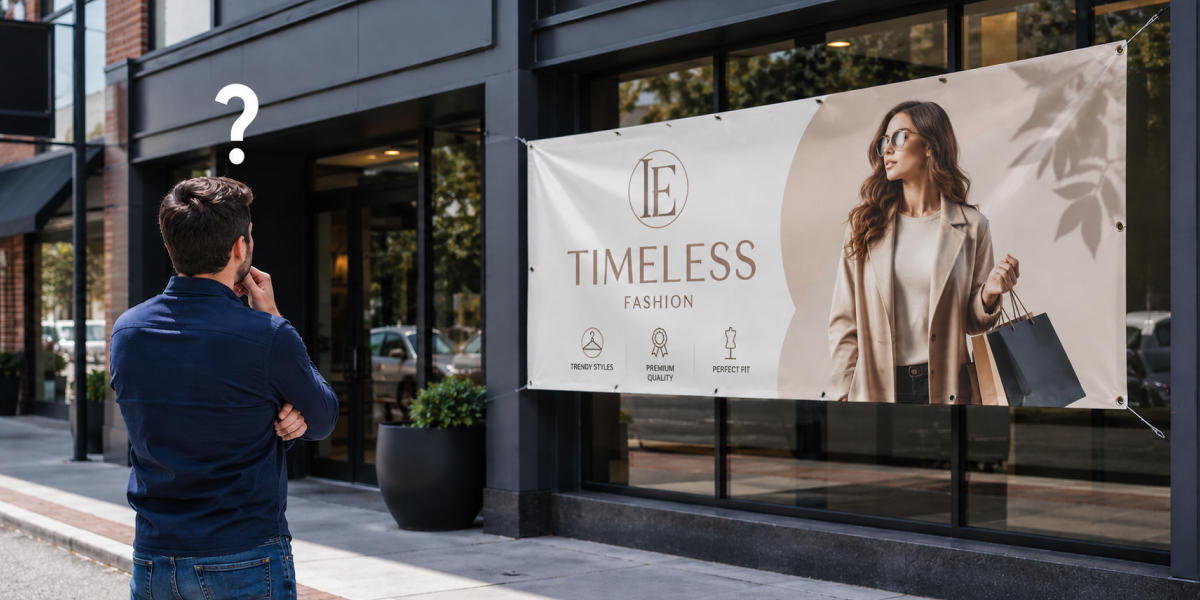
Placing an order for custom banner printing seems easy until you are faced with making a choice from among several products that all seem reasonable on the product page. The banner that will work well inside a booth at a trade show might not be suitable for use on the outside of a fence, storefront, grand opening, or event. Material, size, placement, exposure, and mounting can change everything that you need.
With so many custom banners available, making your decision based solely on appearance will inevitably result in a wrong selection and a subsequent replacement.
In this guide, we will assist you with the process of making that selection before ordering your banner printing. We will review the factors influencing your decision-making process, such as the place of your banner’s display, viewing conditions, durability, mounting technique, and reusability.
Once these requirements are clear, the process of choosing custom banner printing will become rather easy.
If you want to have a basic understanding of the printing process and banner types, our article on “what is banner printing” can be of great assistance.
Start with Where and How Your Banner Will Be Used
All successful banner printing projects start with determining the exact physical location where the banner is going to be hung. The place and method of installation determine all the technical specifications of the banner prior to any decisions about graphics and color.
Indoor Display Banners
The interior environment is fully controlled, and there are no detrimental effects of wind, rain, and changing temperatures. The use of custom indoor banners calls for precise printing, vivid colors, and good texture.
- Retail Zones & Offices: Installed on walls, aisles, or countertops in order to highlight promotional information or corporate identity.
- Trade Fairs & Conventions: Utilizing high-quality fabric banners that create a mark in the bright lights of such events.
- Events: Used as stage backdrops and directional signage at professional events.
Outdoor Displays Banners
An outdoor environment is full of unpredictable physical forces that will eventually lead to the destruction of an unprotected sign within just a few days. In an outdoor environment, everything should revolve around structural survival and material strength. This is because sunlight, rain, wind, temperature changes, and prolonged exposure can take a toll on the material and the configuration that you are going to choose.
- Storefronts and large outdoor spaces: Suffer from constant exposure to sunlight, UV deterioration, and rainfall.
- Fences and open spaces: Suffer from high wind loads that impose a huge load on mounting mechanisms.
- Custom outdoor banners: Such banners have to be designed to withstand the harsh conditions by using robust construction materials.
Choose the Banner Material Based on the Environment
Choosing the right substrate is the most critical technical choice that you will make. Although an entire article may be devoted to comparing manufacturing specifications, you must know the basic function of the major materials.
Vinyl Banners
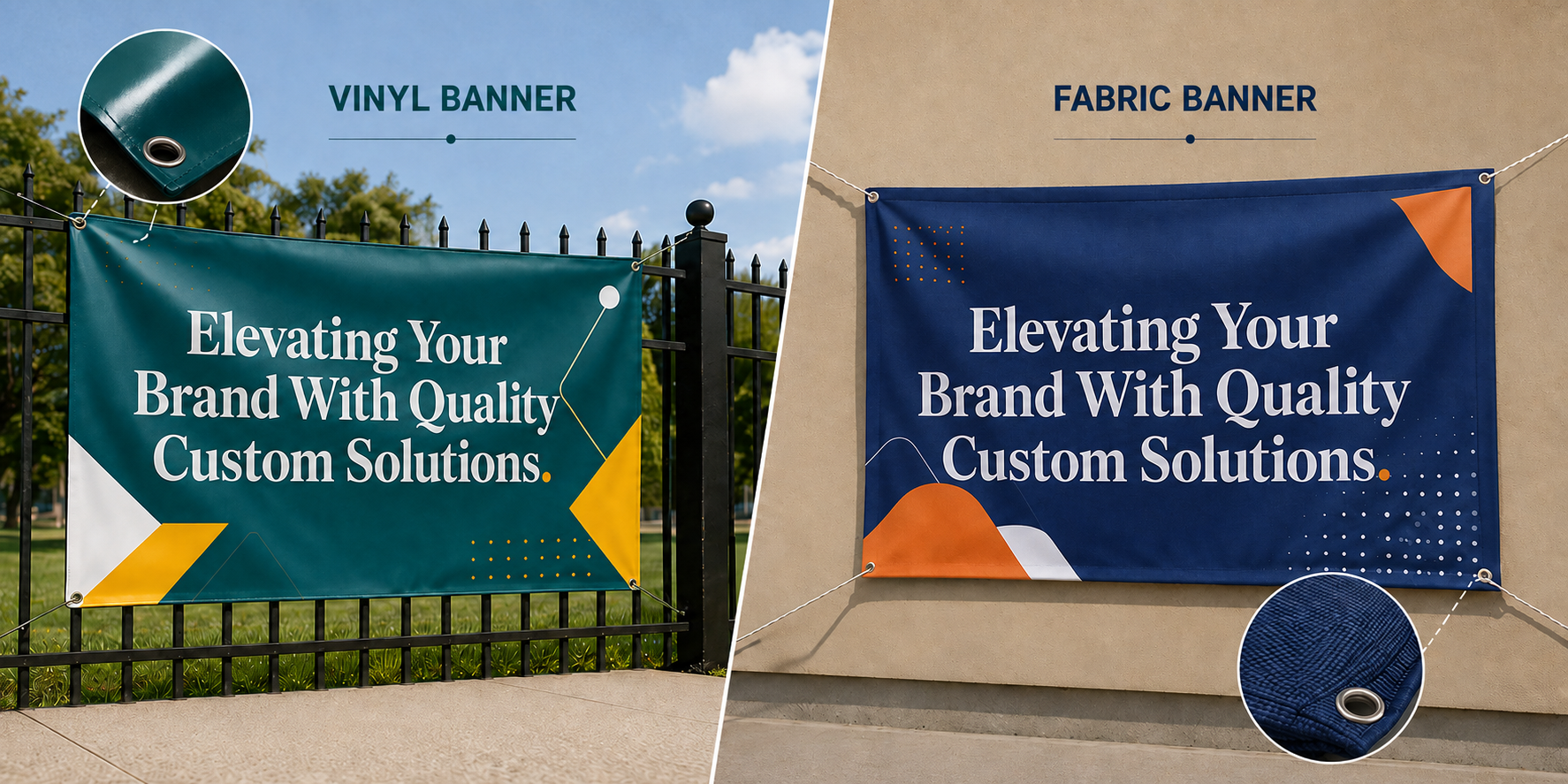
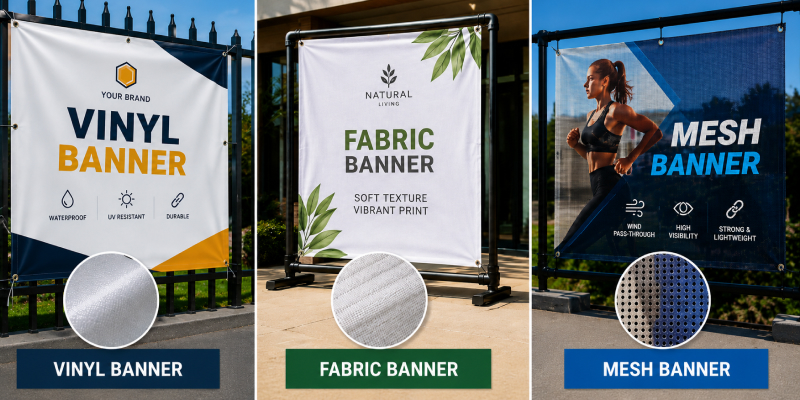
Vinyl is the most reliable material for large-scale outdoor advertising, powerful retail promotion, and long-term exterior display use. Custom vinyl banners have extremely high water-resistance properties, natural resistance to fading, and can be easily cleaned. Their surface has high opacity that guarantees high visibility of your graphics under bright sun.
Fabric Banners
Premium fabric banners have been designed solely for indoor use. It makes for a high-end look in corporate events, temporary trade exhibitions, and professional gallery presentations. The fabrics used are made of woven polyester, which does not reflect any of the overhead lights inside the room but rather absorbs them.
Mesh Banners
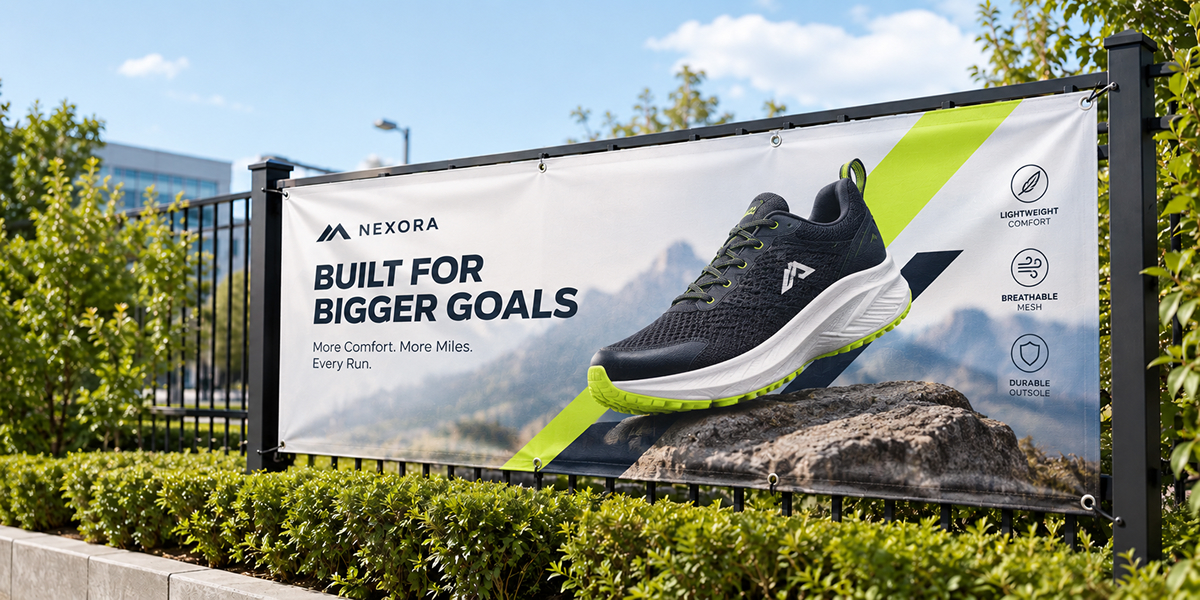
For wind-swept zones, exposed construction job sites, and chain-link fencing surrounding the perimeter, a mesh banner is an essential component. Designed with thousands of small interwoven holes, the material lets up to 30% of the wind force pass through the banner. This flow of air will prevent the banner from becoming a sail that rips off its anchors.
When a Specialty Banners Format Works
Specialty banner formats come in handy when there are difficulties in the architecture involved. Standard formats can be inappropriate for such architectural conditions. The specialty formats that are used to solve such specific functional problems include:
- Double-Sided Banners: These are best used for projecting sidewalk signs that can be read from either side.
- Pole Banners: Made with top and bottom sleeves to be mounted onto municipal light poles.
- Backlit Banners: These are perfect for use at night and in malls where the graphics are made using an internal LED matrix.
- Large Banners: These banners are made of 18 oz scrim vinyl to span massive open gaps on buildings.
Match the Banner Format With Display Location
The physical structure supporting your sign determines the specific form that you will ultimately purchase. A banner that is visually appealing when displayed flat against the drywall surface will be a failure if strung across an opening between two support structures.
Wall-Mounted Banners
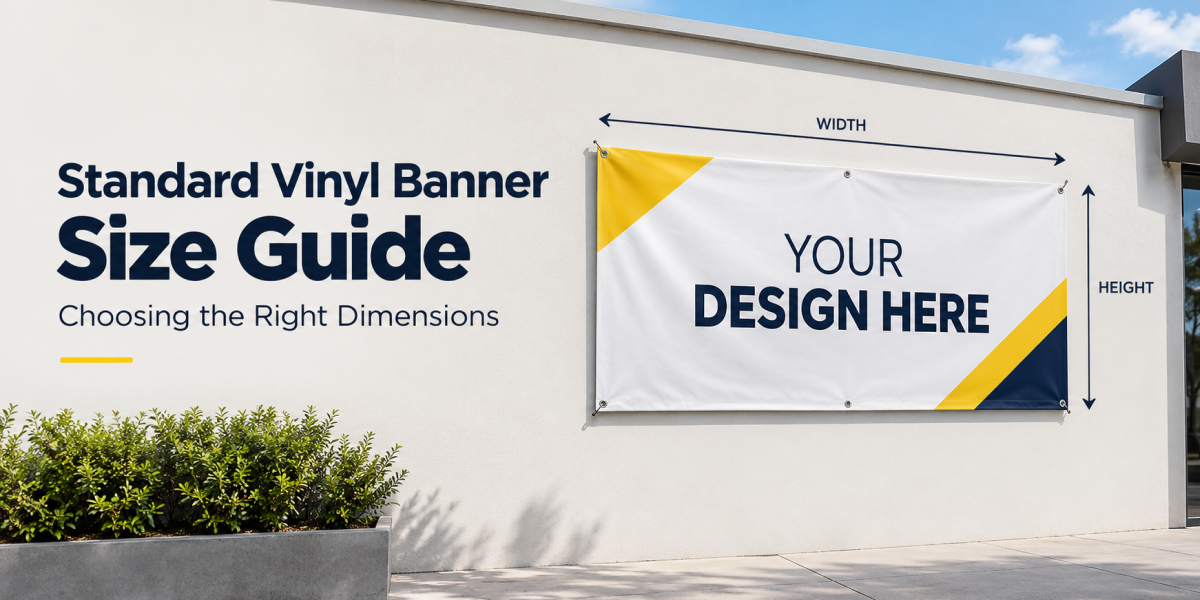
When you are mounting your sign straight onto a brick, stucco, or wooden facade, the first thing you need to consider is flat tension. This is where conventional solid vinyl banners prove themselves to be ideal since there will be no wind pressure from behind.
Fence Banners
Where there are chain-link fences at construction sites or sports arenas, banners should be made out of mesh panels for the same reason that attaching a standard banner to flexible fence material causes tension, thus ripping the edges of the sign.
Pole-Mounted and Street-Side Signs
Suspended over the streets or in the parking lot paths, such signs need pockets that allow the sign to easily slip over the rigid metal hardware arms.
Freestanding/Event Displays
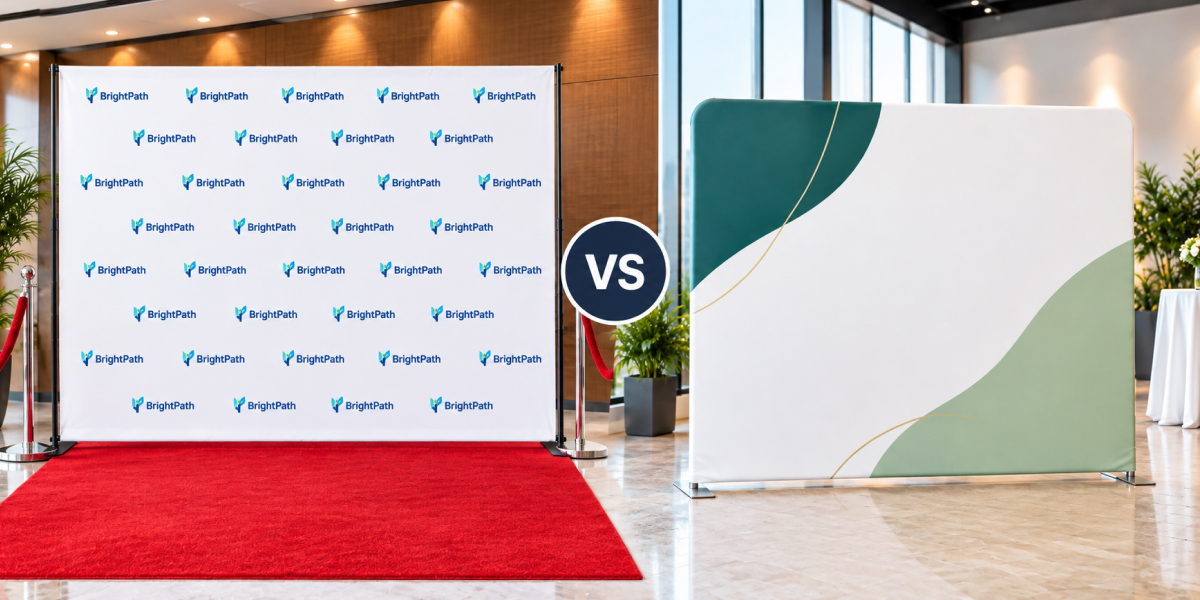
In the hall of a convention center or in the booth of a pop-up exhibit, one is unlikely to get hold of any existing walls or fencing. In such situations, freestanding banners like event banners/trade show banners need to be used.
Big Outdoor Spaces and Backgrounds
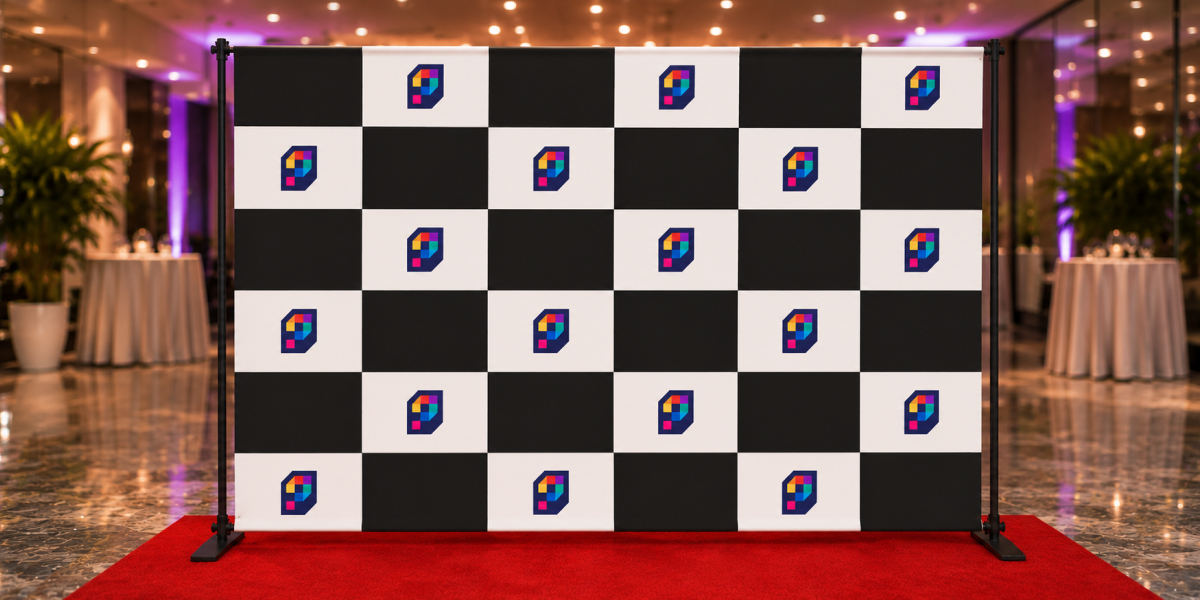
Media walls and red carpet areas need special matte media options such as step-and-repeat backgrounds. Large banners are especially designed to prevent camera reflection, ensuring that the logos of corporate sponsors stay clear on all event photographs.
Get the Banner Size Right for Its Viewing Distance
A common mistake in custom sign ordering is choosing the dimensions based solely on the available display area, without calculating how the target audience will actually encounter the sign. A banner that fits perfectly onto the wall can still be entirely ineffective if the dimensions of the letters do not match the reading speed and the distance of the viewers.
The Viewing Distance Equation
The height of your letters must vary with the speed of vehicles. For every 100 feet of viewing distance from the viewer to your sign, your letters must be at least 10 inches high for readability. If a vehicle is passing by your area at 50 mph and the viewer is 250 feet away from your sign, he will miss seeing your small display entirely. That is why you must have large banners with big letters.
Information Volume as Compared to the Size
If your sign needs more than one line of text, like the company name, another call-to-action, and even an arrow indicating the direction, then you need more square footage to ensure there is enough white space around the text.
Landscape v/s Portrait Orientation
Tall vertical displays look great when hung up against doorways, stage backdrops, or even around columns. The wide horizontal display is a necessity for freeway visibility, fence lines, or storefront facades, where you read left to right.
Consider How People Will See the Banner
To increase visibility, observe the traffic patterns around your site. The viewing angles and traffic flow determine whether a basic single-sided display is sufficient or a more complex double-sided one is required.
One Direction of Traffic
When your sign is pressed up against a building wall inside your office, located right behind the stage, or even attached to the entrance facade of your storefront, the viewers will approach it from a single front angle.
In such situations, single-sided banner printing turns out to be the most efficient and economical choice. Here, the back of the material stays hidden from view. This will allow you to focus more on the front-facing graphic contrast.
Multiple Directions of Traffic
If a sign is perpendicular to the sidewalk, crossing an open courtyard, or suspended overhead over walkways in a convention center, traffic will approach from both directions at the same time. If you use a single-sided sign, then you will have half your viewers staring at a blank gray backer.
- Double-Sided Printing: This uses unique blockout layers placed in between the material to ensure that light does not pass through. The result is a clear message regardless of which way pedestrians view the message.
- Fence and Street Configurations: Open-air settings and street-facing edges gain enormously from the use of double-sided arrangements, effectively giving you twice the advertising space from one mounting frame.
Close Range Visibility v/s Long Range Visibility
The proximity of your viewer alters your requirements for texture. Viewers in close range will notice any blemishes, imperfections, and any joining of materials.
For an indoor setting, where your viewers will be in close range, fabric banners are recommended. It will provide you with a smooth and elegant look. Long-range viewing depends mainly on sheer size, vibrant color, and structural weather resistance.
Think About How Long and How Often You’ll Use It
Before choosing any banner, you must ask yourself: how long does the banner need to stay up? Consider how often you will use it, how frequently it will be moved, and if the same banner needs to support multiple locations for a prolonged period or not.
Determining your operational lifespan helps you to avoid overpaying for rugged materials you do not need. This will make sure that you don’t under-specify a long-term display.
Short-Term Use
Short-term applications are geared toward achieving an effect immediately rather than over a period of years. The materials used for short-term promotions are usually light and easily installed, removed, and recycled.
- Grand Opening Banners: Created to generate immediate hype at a new establishment within a period of 30-60 days.
- Sale Banners and Promotional Banners: These are created for retail clearance sales, either seasonally or during weekends.
- Political or Event Banners: Short-term banners designed for driving awareness.
Recurring Use
If you expect your banner to make its way through the years, your purchasing considerations should take into account portability, lack of wrinkling, and easy cleaning.
- Seasonal Sales: Annual winter clearance sale or regular summer festival.
- Trade Shows and Annual Conventions: Displays that require packaging into wooden crates, transported throughout the nation, and reassembled without any signs of creases.
Long-Term Display
For permanent outdoor branding, roadside advertising, and storefront displays, durability is an absolute priority. Signs for long-term exposure to the elements will need to endure constant exposure to UV rays, heavy rains, and wind cycles. To avoid rapid deterioration, these banners are required to be made of thick materials, heavy-duty borders, and UV-stable outdoor inks.
Consider the Banner's Surrounding Space
A banner does not exist in isolation. That is the reason why you have to keep track of its surroundings. It has to compete for visual dominance with building design, environmental lighting, and surrounding signs. If you do not take into consideration the surrounding environment, then your custom banner can end up blending right into the surroundings or clashing with other signs.
When planning your layout and dimensions, you should conduct a thorough visual audit of the immediate space surrounding the banner. Consider how the banners will look alongside:
- Other Signage: Make sure multiple signs are placed considerably far apart, leaving enough space that each one is easy to see.
- Booth Structures: In a trade show, the banner should work with the booth walls, counters, and other branded elements.
- Storefront Elements: Elements such as windows, doors, awnings, and signs can affect the amount of space that is available for the banner placement.
- Event Decor: The banner must fit well with the event decorations, such as lighting, seating, and other essential elements.
- Flags and Displays: Banners that are alongside flags and other promotional display items should be placed in such a way that each element is visible without looking clumped up.
- Tables and Backdrop: For event displays, banners are required to complement tables, backdrops, and other surface areas.
- Available Wall or Floor Space: Before choosing the size of the banner, measure the available wall or floor space.
Plan for Installations, Storage and Reuse
The technicalities of how you are going to hang, strike, and store your sign should be decided before you place your custom banner printing order, not after it arrives at your doorstep. The requirements for installing a banner directly influence the finishing options that you are required to be clear about during the purchasing process.
Ask yourself about:
Mounting Hardware
Will this sign be secured to a solid brick wall, tied directly to a chain-link sports fence, or suspended from an internal ceiling truss using steel cables? The style of your mounting will dictate whether you will need metal edge grommets, heavy hems, or structured pole pockets.
Mobility and Transport
Will this sign be permanently attached to a building, or will there be a need for it to travel in any compact vehicle and move to places for regional marketing events? If the banners are to be transported frequently for events, then lightweight fabric banners or retractable banners (the one that rolls up) can be some of the feasible alternatives.
Storage Strategy
When your banner for promotional events is taken down for a particular season, do you possess a clean and dry space to store it? Be mindful that vinyl signs are meant to be rolled up with the print facing outward to avoid the ink from sticking to each other or cracking. They are never to be folded flat, as flat folding will create a permanent crease that will ruin their use in the future.
Ordering Multiple Banners? Plan for Consistency
Ordering multiple banners for a big project presents its own set of logistical and technical challenges. Even slight variations in size, branding, or material may spoil an otherwise coordinated look, especially when the banners are used collectively or in different locations.
If you want to equip twenty franchise locations with banners, or even plan an organized corporate event in a huge convention center, you need to make sure that there is consistency in all the prints.
When considering ordering several banners at once, think about:
1. Consistent Dimensions
While naturally there will be differences in the dimensions required for an outdoor header board and an indoor booth sign, you should try to keep your dimensions consistent within specific categories. For instance, your sidewalk banners should all measure 3’ x 6’, while your fence banners should all be 4’ x 8’. This will help your team to reuse the same mounting hardware and frames across different setups.
2. Consistent Branding and Color Formulas
When you print the identical digital image on an outdoor vinyl sign and an indoor fabric back panel, there can be subtle differences in the color because the fabric absorbs light differently than the plastic. Partner with your commercial printer to ensure color formula consistency to keep your brand colors consistent.
3. Material Coordination
No mixing materials in the same visual space. When installing three banner displays side by side on the walkway through a venue, make sure that the material used in all three is identical (for instance, use the same weight material, such as 13 oz vinyl). Having a high-gloss vinyl display next to a matte material looks messy and uncoordinated.
4. Repeated Messaging v/s Location-Specific Information
When designing layouts for a mass marketing campaign, keep your main tagline, font sizes, and logo placement in the same spot on each layout. However, if you are going to have information that is location-specific (e.g., the phone number or address of a local store), then place this into an entirely separate “variable data” block at the bottom of the layout. While doing so, ensure that the core branding elements remain untouched.
Choosing the Right Custom Banner Starts With the Right Requirements
Buying custom banners gets easier when you know exactly what you need it to do. There is no need to consider all the available options; rather, you should first consider the role your banner needs to fulfill.
A well-chosen banner seems like a perfect fit with the surroundings and intended purpose of its use. The moment such parameters are established, the process of locating suitable customized banners becomes less complicated.
With us at Printing Limitless, you can have access to various types of banners in terms of designs, materials, sizes, and specialty options for different kinds of business purposes and events. If you are all set to make a purchase, we offer you custom banner printing, which will allow you to design the banner according to your specific needs.
Take a glance, compare what works best for your needs, and select the most suitable banner that is in line with your project!